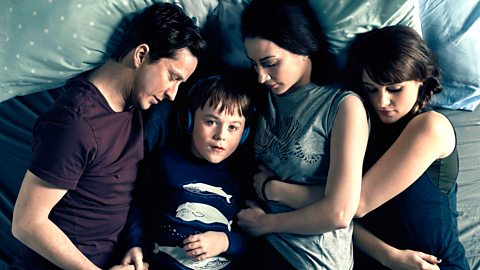
"Longer sleep duration (>10 hours per day) was associated with a lower ADHD [attention-deficit hyperactivity disorder] symptom score" was one of the findings reported by Gabriela Peralta and colleagues [1].
They sought to examine whether a particular set of activities (sleeping, physical activity, television watching, etc) might show some *correlation* to "(1) attention-deficit/hyperactivity disorder (ADHD) symptoms and (2) behavior problems, both assessed at 7 years, in ADHD-free children at baseline."
Drawing on a not-insignificant number of children participants (N=817) who were part of a research birth cohort previously discussed on this blog (see here and see here), authors relied on parental report via the Conners' Parent Rating Scales and the Strengths and Difficulties Questionnaire to ascertain ADHD and 'behaviour problem' scores respectively. This was carried out when the child was aged around 7 years old. A few years earlier - when the child was around 4 years old - parents had previously reported on a few other variables: "the time that their children spent sleeping, watching TV, engaging in cognitively stimulating activities, and engaging in physical activity." The two sets of data were married together for analysis.
Results: it's probably not escaped your notice that (a) parental report is a mainstay of the Peralta data and (b) data for a child at 4 years old and then again at 7 years old represents quite a large time frame during which lots can (and does) happen. With those factors firmly in mind, researchers provided some frequency data on activities at 4 years old. They then added in the data taken at 7 years old where that finding on longer sleep duration (at 4 years) seemed to be linked to lower ADHD scores (at 7 years) came from. Further: "Longer time spent in cognitively stimulating activities (>1 hours per day) was associated with lower scores of both ADHD symptoms... and behavior problems" and also rather interestingly: "Time spent watching TV and engaging in physical activity were not associated with either outcomes."
The quite fuzzy picture emerging from this data - with appropriate caveats - is that sleep and 'keeping the mind active' might be important factors when it comes to the presentation of something like ADHD (symptoms) and other 'behaviour problems' in childhood. The sleep side of things is particularly topical at the moment, given some research chatter about how a sleep intervention might be something to consider for at least some (diagnosed) cases of ADHD (see here). There are also seemingly lots of benefits from ensuring a regular bedtime routine for young children; assuming that is, that poor sleeping patterns are not an early marker for possible ADHD?
The whole 'cognitively stimulating activities' bit is slightly more fluffy in terms of what constitutes such activities and any relationship with ADHD or behavioural issues. I say this on the basis that whilst reading and writing for a 4-year old is likely to be cognitively stimulating, so are lots of other activities such as exploring nature for example or even spending time on the dreaded computer/tablet devices (depending on what activities are being done). Even time spent in front of the gogglebox could be considered cognitively stimulating if they're watching Blue Planet for example, and not just a re-run of Peppa Pig (sorry Peppa). And on the topic of television viewing or at least screen time in the context of ADHD risk, other data have suggested something *correlatively* different from the Peralta findings (see here) just to complicate matters further.
To close, it's been a while but here is some music... Elvin Bishop and a track brought back to life by the Guardians...
----------
[1] Peralta GP. et al. Sleeping, TV, Cognitively Stimulating Activities, Physical Activity, and ADHD Symptom Incidence in Children: A Prospective Study. J Dev Behav Pediatr. 2017 Dec 18.
----------
News and views on autism research and other musings. Sometimes uncomfortable but rooted in peer-reviewed scientific research.
Showing posts with label television. Show all posts
Wednesday, 17 January 2018
Wednesday, 13 September 2017
Autism portrayed in the movies: pleasing some of the people some of the time...
Things have come a long way since the first real mainstream appearance of autism on the silver screen (Rain Man). Nowadays, not a week seems to go by when autism doesn't feature in one form or another on a television show or new film/movie; even appearing in Sesame Street. I see this as a good thing when it comes to bringing autism further into the public psyche and hopefully preventing headlines such as 'Mother sent 'hurtful' letter about 'screechy' son with autism' from making many more appearances.The downside however, is that with every representation of autism, there are typically comments galore about how autism is not being accurately portrayed or represented. A case in point is a new series called Atypical which has, according to one commentator, invited the same-old-same-old from some quarters (see here). Indeed, the old tenet: 'you can please some of the people some of the time, but not all of the people all of the time' seems to be tailor-made when it comes to views and opinions on the representation of autism on the screen.
It's timely that a new paper looking at the representation of autism in film and TV has also been published by Anders Nordahl-Hansen and colleagues [1]. Starting on the basis that: "Inaccurate portrayals [of autism] are a concern as they may lead to increased stereotypes toward the condition" authors concluded that many characters portraying autism seemed to "align unrealistically well with DSM-5 diagnostic criteria." They mention that those 'savant skills' (a.k.a 'a superpower') that every person with autism is supposed to have(!) were VERY well represented in the media content they surveyed. The authors go on to talk about the educational value of such portrayals and "the notion of authenticity in representing the autistic experience."
As I mentioned a few sentences back, I see autism appearing in more TV and films as a good thing. It makes an often invisible condition a lot more visible and helps to spread the idea that children/adults who were traditionally 'hidden away' deserve the same rights as anyone else. Insofar as the notion of 'authenticity' there have been quite a few, quite authentic portrayals of autism on TV shows. 'The A Word' was one of them (see here) (although I don't doubt some might disagree). Of course, there are always going to be creative processes acting on the fictional portrayal of autism; this goes for just about anything to do with creative media - soap operas do this all the time in the constant chase for viewer ratings. Indeed, one should never forget that TV shows and movies are in a constant state of chasing viewer ratings and not always necessarily produced with authenticity in mind.
In the context of autism also being an extremely heterogeneous condition (y'know, those 'autisms' that I keep going on about), I find it nigh on impossible that any single representation of autism is going to please all of the people all of the time. 'Authentic' is always going to be a matter of perspective...
----------
[1] Nordahl-Hansen A. et al. Mental health on screen: A DSM-5 dissection of portrayals of autism spectrum disorders in film and TV. Psychiatry Res. 2017. Aug 22.
----------
Wednesday, 27 April 2016
The A Word: the science behind...
| The A Word |
For those who might not know, this [fictional] series charts the ups and downs of a family living in the Lake District whose lives are in one way or another touched by autism as a function of a 5-year old boy diagnosed with the condition. The show had a notable addition to the cast with a very straight-talking Christopher Eccleston appearing (yes, one manifestation of Dr Who) but all the actors provided some pretty sterling performances including the child actor Max Vento, who plays Joe 'the 5-year old boy with autism'.
I don't want to go into all the ins-and-outs that the series covered (bearing in mind it was a fictional drama series and not 'real life autism' as per series such as the one by Louis Theroux) but there were a number of themes included that do fall into the peer-reviewed science domain typically covered on this blog. I'd like to briefly cover some of those themes and perhaps provide some short discussion on what they might mean without trying to over-analyse or over-generalise things. I might add that this is my interpretation of the series and readers are also advised to see what others also thought about it.
So:
Wandering
Every episode of the series opens with Joe happily strolling down a deserted road set against the backdrop of the beautiful Lake District. You'll already note that Joe is a boy and so already we have our first 'stereotype' when it comes to autism. Joe has a 'thing' for music (and some mighty good taste in music I might add) as per his almost constant earphone-wearing, and seems happy on his trails on his own. During most episodes of his wanderings he's met by a friendly couple who know Joe and are happy to return him home. I personally was in two minds about this depiction. As throughout the series, it's obvious that the writers know something about some of the themes in autism (research and practice) and I daresay that this reference is a nod to the idea that autism and wandering has received some much needed research attention. In real-life however, any 5-year old child discovered walking on their own on any road would in all likelihood trigger safeguarding mechanisms should authorities become aware... see episodes 5 & 6.
Parental concerns and diagnosis
The process of going from parental concerns about Joe's behaviour to getting a diagnosis is covered in the series. Again keeping in mind that this is fiction, I think many people (certainly on Twitter) saw the most disconnect in this part of the story given (a) the reluctance of the parents - particularly the mother - to 'accept' something might be 'out of place' with Joe's behaviour and (b) the extremely quick time taken for a diagnosis of autism or autism spectrum disorder (ASD) to be given. Without generalising, diagnosis here in the UK is very rarely a quick thing and many parents can and do feel some relief as and when the 'hurdle' of diagnosis has been eventually overcome. Certainly here in the UK, receipt of a diagnosis normally triggers access to important future plans.
Schooling
Mainstream schooling vs. home schooling is an important issue covered during the series. We for example, see Alison - Joe's mum - worried about how Joe will cope in his village primary school where his social interaction with other children for example, looks to be minimal at best. The storyline in this area was perhaps one of the most powerful parts of the series as parental worries of 'how will my child cope?' intermixed with the variety of emotions viewers watch the family go through. Interestingly, the series did offer something important to this story as Joe himself voices an opinion about his desire to go to school. Granted things might not always be so easily communicated in real-life but the idea of taking into account the child's wants and wishes when it comes to schooling options is perhaps an important one. Later in the series we also see how Joe does make friends at school. Viewers who've seen the series might have also noticed the opening and closing of school doors during these school segments by Joe reflective of what might be considered a ritual or routine - a core feature of autism.
Speech and language therapy
Again, outside of the dramatic plot line that follows the introduction of a speech and language therapist (SALT) to the series (who it turns out was bullied by the mother of Joe during her school days), it was indeed useful to see how much impact a good SALT can have on a child with autism. As well as emphasising the 'stopping and starting' of developmental progress that accompanies any child irrespective of the presence of autism or not, the series does well to highlight how a range of professionals can make a real difference to the lives of children on the autism spectrum. Personally, I would have liked to have see the archetypal all-rounder that is the occupational therapist (OT) also included in the storyline but there you go...
Sleep
Joe is seen in pretty much every episode asleep with his night light on followed by a soothing kiss good night from his mother. Again, not one to try and generalise but not every autistic child and their family look forward to such peaceful nights...
Parent and family relationships
Throughout the series, viewers watch how the ups and downs of family life manifest in the relationships between family members. We see for example, how Alison devotes almost her entire existence to Joe in terms of getting a diagnosis and arranging suitable schooling for example, whilst also running a busy household and a business. The stresses and strains tug and pull on important relationships manifesting in various different ways and impacting on various decisions. There are sexual scenes during the series and I know from what some people have written, these were thought of as a distraction to the main storyline. I however think it was important for the writers to include all aspects of parent and family relationships including more intimate moments (bearing in mind the program aired after the watershed). The idea also that autism in the family has the ability to impact on siblings was another important feature of the series. The experiences of Joe's older (half) sister, Rebecca, illustrate how siblings might require additional support when a diagnosis of autism is received in the family but also how they can be very vocal advocates for their brother(s) or sister(s) with autism.
Fever and autism (oh and broccoli...)
Episode 4 of the series introduced some interesting research-based concepts into the storyline. We see Joe develop an illness and 'fever' following a planned sleepover with some school friends resulting in some 'changes' to his behaviour. Joe seems more responsive as words like 'empathy' are banded about (bearing in mind no sweeping generalisation are required on this point). Changes to the presentation of autism in 'some' children following fever have been documented in the peer-reviewed literature [1]. It's not by any means a universal phenomenon and so one has to be a little bit cautious about generalisation. It is however something that requires quite a bit more study (allied to related research areas) about how certain 'types' of autism might be sensitive to such physiological changes. In the same episode we also hear mention of the words 'broccoli' and 'research' pointing to another issue that has surfaced on the peer-reviewed autism research radar [2] (see here for even more discussion). Although you might not know it, the commonality between fever and autism and broccoli and autism (aside from autism) is one Andrew Zimmerman and as if to prove a point [3]...
A hat-tip to gluten and casein
I also had to cast a wry smile as the series did include some reference to a topic close to my research heart: diet and autism, and specifically the involvement of gluten and casein. Granted, the reference to gluten and casein (although lactose is mention over casein) comes from one of the other boys sleeping over at Joe's house who has various 'allergies', but again, I think this highlights how the writers had some good insight into the varied autism research scene.
Final thoughts
There is always the risk that films or programmes 'about autism' can present a stereotype of autism and thereby fail to show just how wide and heterogeneous the autism spectrum is. I don't doubt that similar sentiments will be expressed about The A Word paralleling previous artistic presentations such as Rainman. That also important issues such as anxiety and sensory-perceptual issues were only paid lip service during the series is worthwhile mentioning as were the various often life-changing comorbidities that can accompany a diagnosis such as epilepsy or seizure disorders or learning disability. No programme will ever be perfect.
But I do think that quite a few of the important elements that surround childhood autism were included in the series albeit with the hint of drama required for such fictional storytelling. The struggles and strains were balanced with lighter moments and the idea that 'Joe is still Joe' even after receipt of an autism diagnosis came across on multiple occasions particularly from his on-screen sister. I think the writer Peter Bowker probably said it best about The A Word: 'You won't understand autism after watching The A Word – but it will make you want to learn more'. That sounds about as good a sentiment as any when it comes to the series and further expanding the public view about the very heterogeneous autism spectrum...
----------
[1] Curran LK. et al. Behaviors associated with fever in children with autism spectrum disorders. Pediatrics. 2007 Dec;120(6):e1386-92.
[2] Singh K. et al. Sulforaphane treatment of autism spectrum disorder (ASD). Proc Natl Acad Sci U S A. 2014 Oct 28;111(43):15550-5.
[3] Singh K. & Zimmerman AW. Sulforaphane treatment of young men with Autism Spectrum Disorder. CNS Neurol Disord Drug Targets. 2016 Apr 13.
----------
Labels:
autism,
diagnosis,
family,
fever,
intervention,
language,
parents,
school,
siblings,
sleep,
television,
The A Word,
wandering
Saturday, 5 March 2011
Kill your television
It happened again. There I was happily sipping my cup of tepid tea (as we English have been known to do) and browsing the web on a pleasant Saturday afternoon when gasp, a headline emerges from the internet ether - 1 in 60 kids suffer from autism spectrum disorder. Who, where, what and when are the questions that immediately sprung to mind.
Not so long ago I blogged about a media release discussing whether rates of autism are epidemic or not. My main beef with the previous article was the use of a message ('no autism epidemic') without any means of corroborating the accuracy of the statement (i.e. a link to some published research). A quick gander through this latest offering posted on-line in The Times of India regarding the rates of autism in India - the press coverage can be viewed here - stirred similar feelings to that of the last offering.
Scrolling down the article, we find the information is communicated by a Paediatrician attached to a Medical facility based in Chennai, India. If true, not only is it potentially in direct conflict with the previous press release of 'no autism epidemic' statement but perhaps more importantly it is an absolutely astounding prevalence rate, particularly if also applied to the gender ratio gap in autism.
Looking through the article however there is unfortunately no link to any published research; in fact no indication of how this figure was arrived at or whether the report is based on anything other than an opinion. Granted, I understand that there is always some journalistic 'flair' involved in any story, including as a catchy headline. But should this really be an excuse to print without corroborating evidence?
There have already been a few comments posted against this story on the on-line source. Interestingly up to this point, no one has commented on the source of the 1 in 60 figure; most people are finding a little bit of a problem with the explanation: 'excessive television watching' leading to a failure to interact with family members as a cause of autism. I will come back to this shortly.
Suffice to say that having conducted a search of the published literature available on prevalence rates of autism in India, at the moment I cannot find any published reference corroborating the 1 in 60 figure. In fact I can't seem to find anything approximating a current estimated prevalence rate for autism in India, aside from a comment in a paper from 2010 about a plan to start looking at the epidemiology which at the moment remains just that, a plan.
Anyway, back to the comment about TV causing autism. Mmm, where to start, where to start. Well, first there is the old adage of correlation not implying causation. I have discussed this issue in a previous post and so won't dwell on it too much. The literature on TV and autism covers quite a lot of ground, mainly from the point of using television for things like social skills training. A recent study from Thailand has also looked at TV viewing habits for children with autism compared with controls and concluded that TV viewing for children with autism started earlier, lasted longer in duration and interestingly, included more adult programmes (I assume this means more documentaries et al rather than the other 'adult' content). How far this is applicable to a non-Thailand population remains to be seen.
The question of whether TV causes autism has been asked by previous authors so is not a new question. Then, as now, the main issues coming up against any 'universal' effect of TV is the question; does TV 'cause' autism or are children with autism more likely to watch TV as a result of their autism?
I try to stay impartial on this blog, letting the evidence speak (obviously with the caveat that science is about probability not absolutes). On this matter I am leaning towards the latter position suggestive that autism is a predisposer to increased TV viewing rather than TV being a 'causer'.
I know that there is a body of research suggestive that too much TV can be bad for child development and one cannot discount that this may produce some effect alongside the 'sedentary lifestyle' aspect. But like all things, there are two sides to every story. Many of the TV programmes for younger children over the years (covering the same time period as the increase in cases of autism?) are geared to improve various aspects of child development. If not why are the BBC for example, investing so heavily in CBeebies and programmes like Something Special and Waybuloo and their drive towards 'better' psychological health and development?
More research is perhaps needed in this area, specifically into whether TV has any contribution to autism given the dyadic interaction required between 'man and machine'. But perhaps also such research should be conducted without the demonising undertones that have blighted our relationship with our favourite gogglebox and without the sweeping statements about TV causing autism.
Not so long ago I blogged about a media release discussing whether rates of autism are epidemic or not. My main beef with the previous article was the use of a message ('no autism epidemic') without any means of corroborating the accuracy of the statement (i.e. a link to some published research). A quick gander through this latest offering posted on-line in The Times of India regarding the rates of autism in India - the press coverage can be viewed here - stirred similar feelings to that of the last offering.
Scrolling down the article, we find the information is communicated by a Paediatrician attached to a Medical facility based in Chennai, India. If true, not only is it potentially in direct conflict with the previous press release of 'no autism epidemic' statement but perhaps more importantly it is an absolutely astounding prevalence rate, particularly if also applied to the gender ratio gap in autism.
Looking through the article however there is unfortunately no link to any published research; in fact no indication of how this figure was arrived at or whether the report is based on anything other than an opinion. Granted, I understand that there is always some journalistic 'flair' involved in any story, including as a catchy headline. But should this really be an excuse to print without corroborating evidence?
There have already been a few comments posted against this story on the on-line source. Interestingly up to this point, no one has commented on the source of the 1 in 60 figure; most people are finding a little bit of a problem with the explanation: 'excessive television watching' leading to a failure to interact with family members as a cause of autism. I will come back to this shortly.
Suffice to say that having conducted a search of the published literature available on prevalence rates of autism in India, at the moment I cannot find any published reference corroborating the 1 in 60 figure. In fact I can't seem to find anything approximating a current estimated prevalence rate for autism in India, aside from a comment in a paper from 2010 about a plan to start looking at the epidemiology which at the moment remains just that, a plan.
Anyway, back to the comment about TV causing autism. Mmm, where to start, where to start. Well, first there is the old adage of correlation not implying causation. I have discussed this issue in a previous post and so won't dwell on it too much. The literature on TV and autism covers quite a lot of ground, mainly from the point of using television for things like social skills training. A recent study from Thailand has also looked at TV viewing habits for children with autism compared with controls and concluded that TV viewing for children with autism started earlier, lasted longer in duration and interestingly, included more adult programmes (I assume this means more documentaries et al rather than the other 'adult' content). How far this is applicable to a non-Thailand population remains to be seen.
The question of whether TV causes autism has been asked by previous authors so is not a new question. Then, as now, the main issues coming up against any 'universal' effect of TV is the question; does TV 'cause' autism or are children with autism more likely to watch TV as a result of their autism?
I try to stay impartial on this blog, letting the evidence speak (obviously with the caveat that science is about probability not absolutes). On this matter I am leaning towards the latter position suggestive that autism is a predisposer to increased TV viewing rather than TV being a 'causer'.
I know that there is a body of research suggestive that too much TV can be bad for child development and one cannot discount that this may produce some effect alongside the 'sedentary lifestyle' aspect. But like all things, there are two sides to every story. Many of the TV programmes for younger children over the years (covering the same time period as the increase in cases of autism?) are geared to improve various aspects of child development. If not why are the BBC for example, investing so heavily in CBeebies and programmes like Something Special and Waybuloo and their drive towards 'better' psychological health and development?
More research is perhaps needed in this area, specifically into whether TV has any contribution to autism given the dyadic interaction required between 'man and machine'. But perhaps also such research should be conducted without the demonising undertones that have blighted our relationship with our favourite gogglebox and without the sweeping statements about TV causing autism.
Subscribe to:
Posts (Atom)